Root Metaphors of Mind with David Pearce
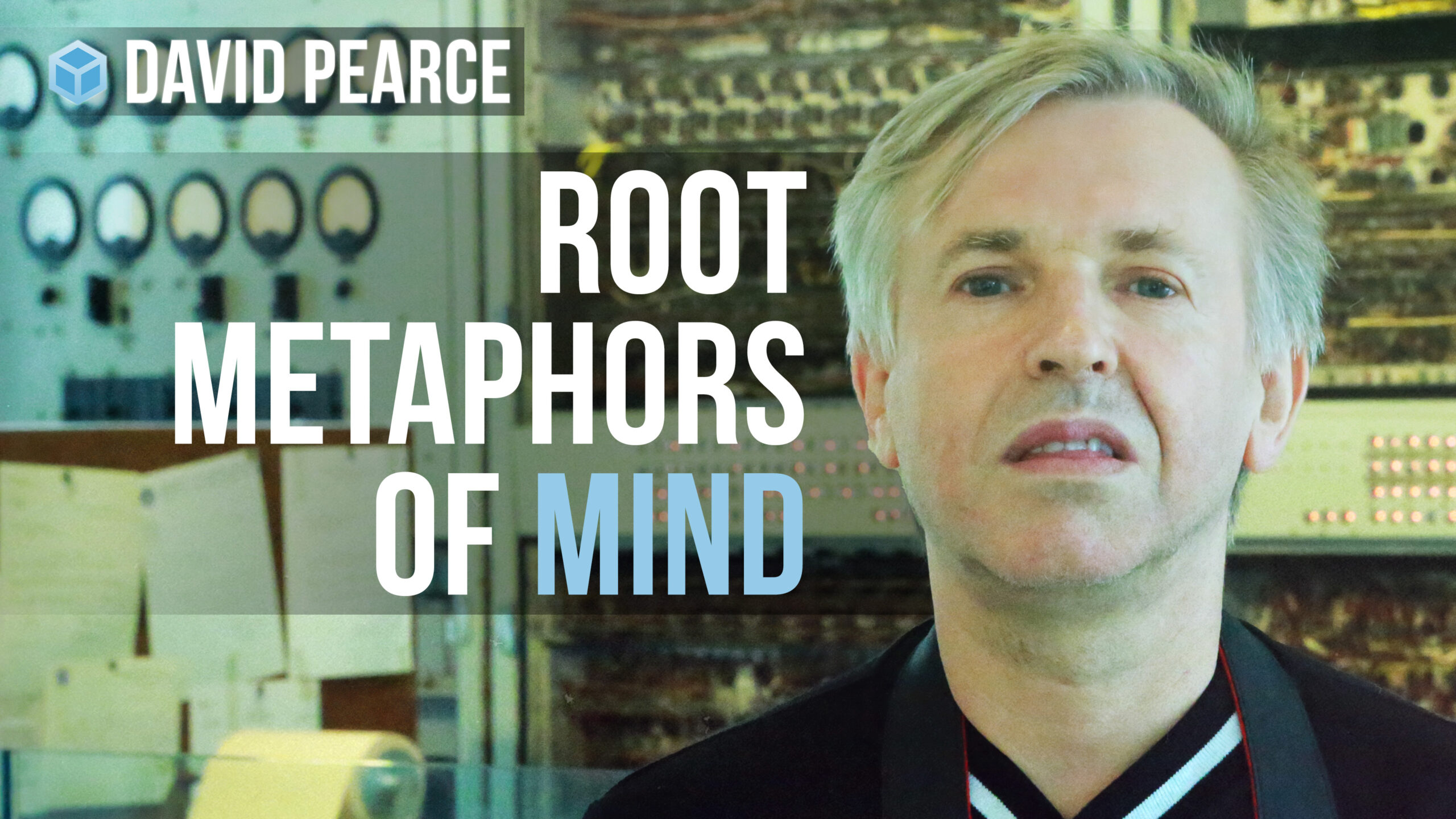
David Pearce stands in front of CSIRAC – Australia’s first electronic computer, a classical computing museum relic that relies on huge, hot vacuum tubes to process rigid, binary code. He discusses quantum computing – a technology that operates on qubits capable of existing in multiple states at once – which he says may overtake classical computing as the root metaphor of mind.
He explains that throughout history, humanity has used the dominant technology of the age – such as clockwork mechanisms or hydraulics – as a metaphor to understand the human mind. Today, our dominant metaphor is the classical digital computer. Pearce poses the question of whether this will remain true as we transition into the era of quantum computing.
He argues that instead of viewing ourselves as slow, serial digital computers, we will eventually be recognised as incredibly sophisticated quantum computers, fine-tuned by hundreds of millions of years of evolution. The core difference he highlights is that organic minds have solved the “binding problem” to create a unified subject of experience. While classical computers possess staggering computational power today, they are essentially just “a bunch of circuits” and lack the unitary agency or subjective experience required to be truly intelligent subjects.
The place was quite noisy – couldn’t be helped.
Transcript

Proverbially the dominant technology of an age provides its root metaphor of mind. Whether we have the clockwork universe, the hydraulic metaphors, of course the dominant metaphor of our age has been the digital computer. The question now is though if as we approach an era of quantum computing whether the digital computer will remain our root metaphor of mind the universe and everything but we are heading towards an era of quantum computing. So the question arises will next century and beyond we retain this metaphor of classical digital computers as the model of mind our root metaphor of mind or instead will we come to conceive ourselves as quantum computers. Now if one conceptualizes the mind as like a slow serial classical digital computer then this would seem unlikely. But if as I would argue what distinguishes organic robots above everything else is our capacity to solve the binding problem then I think yes we will be recognized as quantum computers extraordinarily sophisticated quantum computers fine-tuned optimized by hundreds of millions of years of evolution.
I’m standing in front of CSIRAC, Australia’s first digital computer. A monstrous beast, but the little phone in my pocket now has far more computational power than CSIRAC. Not really that in sub-Saharan and Africa too people in many cases relatively poor people also have little phones, smartphones, computers that have far more power than CSIRAC. So in one sense the past 3, four, five decades have witnessed extraordinary technological power exponential growth of computing power. There’s a this risk of fantasies of equivocation here in that a classical digital computer. It’s not really not a subject of experience. It isn’t a unitary agent. And if you haven’t got a unitary agent, in what sense can you speak of a system that is intelligent? Sure, the computer can be systematically interpreted in certain ways as though it were a unitary agent, but no. You’ve just got a bunch of circuits.
Timestamps / Chapters
0:00 Intro: Historical root metaphors of the mind
0:24 The shift toward a quantum computing era
1:06 Organic robots, quantum computers, and the “binding problem”
1:28 The exponential growth of classical computing power
2:09 Why classical computers lack unitary agency and subjective experience
David Pearce’s Work
David Pearce is a well-known transhumanist philosopher whose primary focus is the ethical obligation to eliminate suffering in all sentient life.
You can explore his work here:
- The Hedonistic Imperative: His foundational 1995 internet manifesto detailing how biotechnology, genetic engineering, and nanotechnology can be used to phase out the biology of suffering. https://www.hedweb.com/
- BLTC Research: The network of websites he maintains that publish texts on transhumanism, biopsychiatry, and paradise engineering. https://www.bltc.com/
- The Abolitionist Project: Pearce’s overarching project outlining the moral imperative to redesign the global ecosystem to abolish suffering for both human and non-human animals. https://www.abolitionist.com/