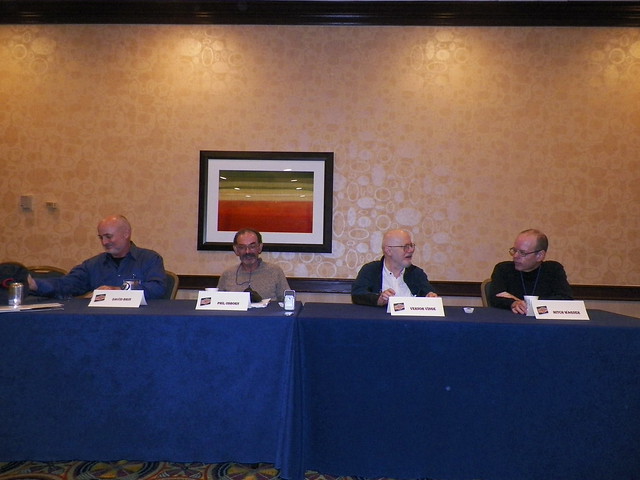
Panelists: David Brin, Phil Osborn, Vernor Vinge, Mitch Wagner. Filmed at Los Con 39 #loscon
On November 24, 2012 at LAX Marriott Hotel, Los Angeles, California.
aleph.se/Trans/Global/SingularityThe technological singularity is a hypothetical event related to the advent of artificial general intelligence (also known as “strong AI”). Such a computer, computer network, or robot would theoretically be capable of recursive self-improvement (redesigning itself), or of designing and building computers or robots better than itself. Repetitions of this cycle would likely result in a runaway effect – an intelligence explosion – where smart machines design successive generations of increasingly powerful machines, creating intelligence far exceeding human intellectual capacity and control. Because the capabilities of such a superintelligence may be impossible for a human to comprehend, the technological singularity is the point beyond which events may become unpredictable or even unfathomable to human intelligence.
The term technological singularity was popularized by mathematician, computer scientist and science fiction author Vernor Vinge, who argues that artificial intelligence, human biological enhancement, or brain–computer interfaces could be possible causes of the singularity.
Guest of Honor: Vernor Vinge
Artist Guest of Honor: Alan White
Fan Guests of Honor: Lloyd Penney & Yvonne Penney
Costume Guest of Art: Mela Hoyt-Heydon
Panelists: Ben Goertzel, David Chalmers, Steve Omohundro, James Newton-Thomas – held at the Singularity Summit Australia in 2011 Panelists discuss approaches to AGI, progress and impediments now and in the future. Ben Goertzel: Brain Emulation, Broad level roadmap simulation, bottleneck, lack of imaging technology, we don’t know what level of precision we need to reverse…
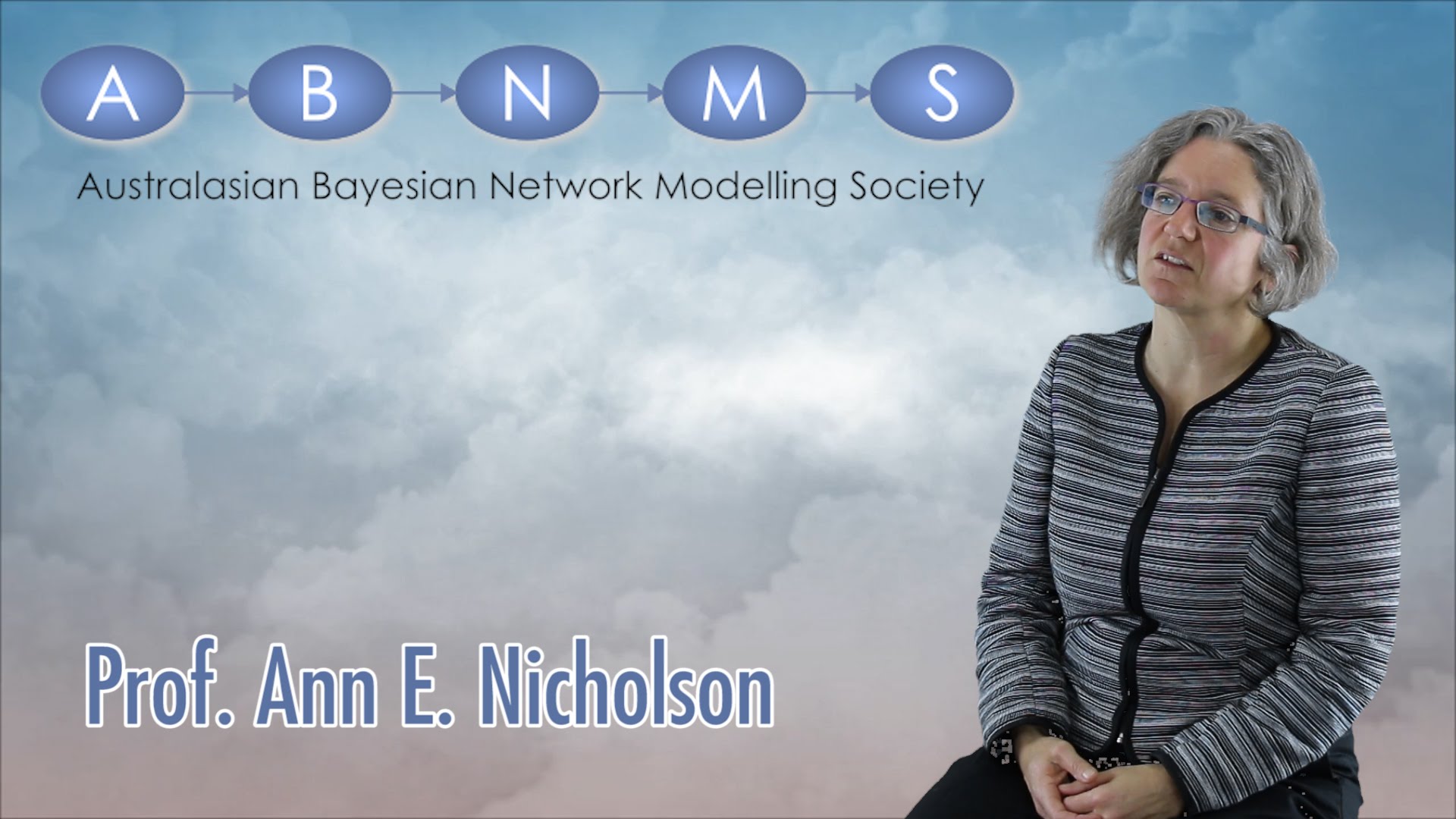
November 23 – 24, 2015: Pre-Conference Workshop November 25 – 26, 2015: Conference [Official Website Here] Location: Monash University, Caulfield, Melbourne (Australia) Promo vid | Contact: abnms2015@abnms.org Keynote Speakers: The conference organisers are pleased to announce that Dr Bruce Marcot of the US Forest Service, Dan Ababei from Lighttwist Software, Netherlands and Assoc Prof Jonathan…
Projects at SENS Foundation Sens Foundation has a lot of projects that were working on all at the same time. There are 3 projects that we are working on at our research center in California and then there are a whole bunch of others that we support at university laboratories around the world – mostly…
In asking AI researcher Juergen Schmidhuber about his thoughts on progress at DeepMind and about the AlphaGo vs Lee Sedol Go tournament – provided some initial comments. I will be updating this post with further interview. Juergen Schmidhuber: First of all, I am happy about DeepMind’s success, also because the company is heavily influenced by…
Panelists ([from left to right] Hilary Greaves, Peter Singer, Justin Oakley & David Pearce) discuss what they believe are important philosophical aspects of the Effective Altruism movement – from practical philosophy we can use today to possible endpoints implied by various frameworks in applied ethics. The panelists navigate through a wide range of fascinating and…
Adam Ford: G’day everybody – we’ve got Michael Shermer here today and we’re going to discuss science advocacy as well as the up and coming ‘March for Science’ which is happening on the 22nd of April. And I’m helping out with the Melbourne March for Science here in Australia. Michael is in California. Michael is…