Compassionate Purpose – Magnus Vinding Interview
What if the point of self-improvement were not just to feel better or get ahead, but to become more capable of helping in a hurting world?
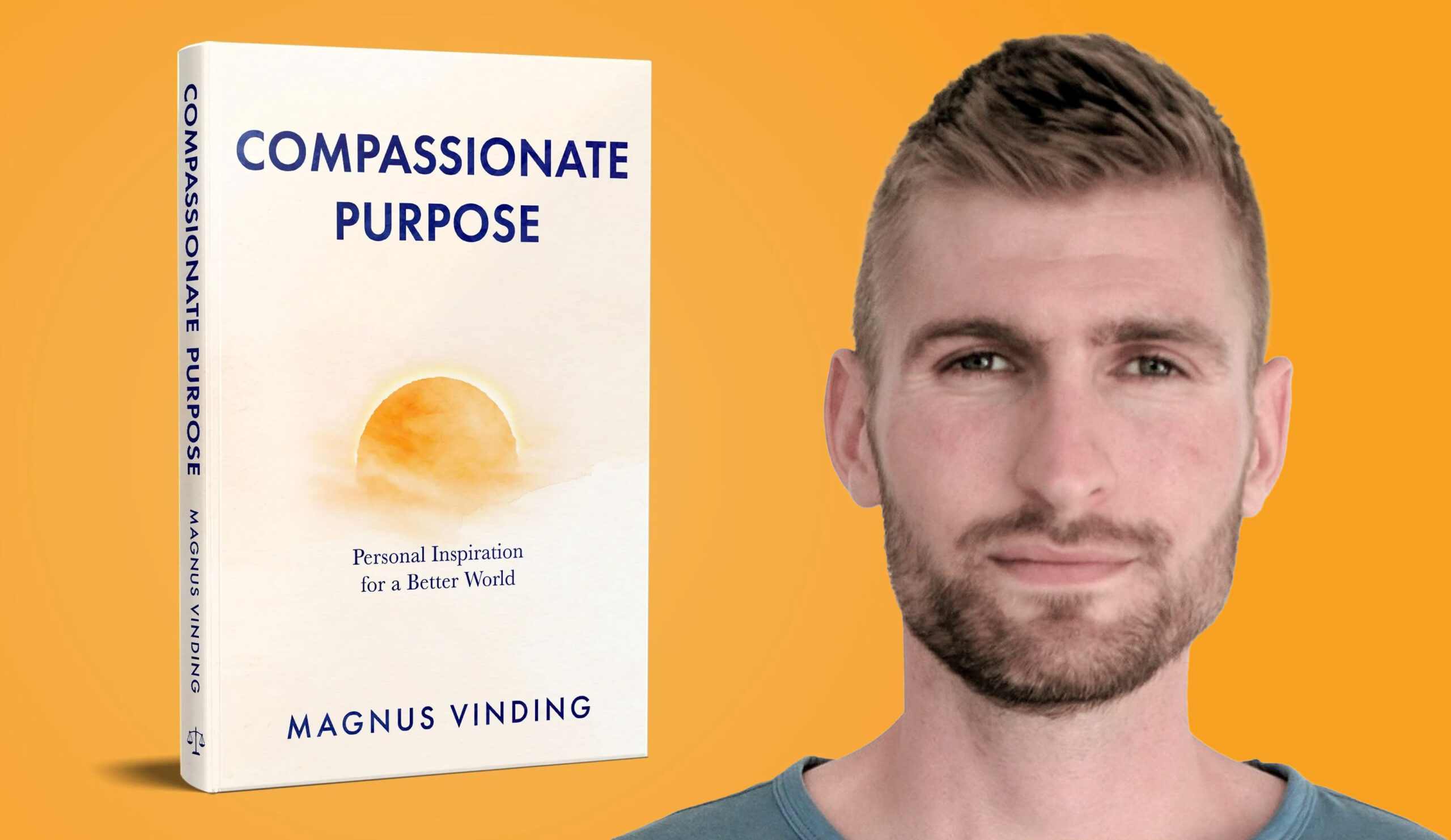
I recently had the pleasure of welcoming Magnus Vinding back to the channel. We last spoke a few years ago about his book Suffering-Focused Ethics, and this time we got to dive into his newest release, Compassionate Purpose.
This book is essentially the capstone of a philosophical triad he’s been working on, which builds a comprehensive worldview piece by piece:
- Suffering-Focused Ethics (2020): The moral foundation, arguing that reducing extreme suffering should be our highest overriding priority.
- Reasoned Politics (2022): A structured framework for approaching politics, clearly separating our core values from the empirical evidence of how to actually achieve them.
- Compassionate Purpose (2024): A deeply practical, almost “self-help” approach tailored for individuals who want to actively reduce suffering without burning themselves out.
Bridging Suffering Focussed Ethics with Everyday Psychology
What I really appreciate about Compassionate Purpose is how it tackles the psychological toll of caring deeply about the world. If you adopt a suffering-focused worldview, it’s incredibly easy to feel overwhelmed by the sheer scale of pain in the universe, or to feel socially isolated when others don’t share your urgency.
Magnus and I reflect heavily on how to manage these exact challenges. The goal isn’t just to keep your head above water in a difficult world, but to figure out how to be a truly resilient and effective agent for change. I’ve been going through a bit of a self-help phase lately myself, and I honestly found this material incredibly refreshing and immediately useful to engage with.
Confronting Extreme Suffering
We also got into some of the heavier philosophical mechanics behind his views. For instance, I asked Magnus why he relies on such vivid, extreme examples (like torture or being burned alive) rather than comfortable, academic abstractions when discussing ethics.
We discuss how evolution actively designed pain and terror to be overwhelmingly intense because avoiding death was urgent for our ancestors, whereas pleasure only needed to be mild enough to motivate reproduction – to my mind this helps grounds why extreme suffering carries such a distinct, asymmetrical moral weight compared to everyday happiness.
Looking to the Future
Towards the end of our chat, we zoomed out to look at the exceptionally long-term future. We touched on the unpredictable variables of AI sentience, astronomical risks (s-risks), and how to weigh the dangers of human extinction versus a potentially volatile transhumanist future.
I also asked him a question I always love exploring: If a wiser civilization 200 years from now looked back at us, what would they find the most morally shocking? His answers were factory farming, and the sheer irresponsibility with which we are currently developing powerful technology.
You can find more of Magnus’s work over at his website, and most of his books are actually available for free on Amazon.
Compassionate Purpose
In Compassionate Purpose, Magnus Vinding bridges self-help and ethics with a framework for personal development in service of a larger goal: reducing extreme suffering. From self-compassion and motivation to habits, relationships, and concrete action, this book is a toolkit for building a life that takes suffering seriously without losing hope or direction.
Post: https://magnusvinding.com/2026/05/05/compassionate-purpose/
Amazon: https://www.amazon.com/Compassionate-Purpose-Personal-Inspiration-Compassion/dp/B0GZH8Q576
Magnus Vinding is the author of Suffering-Focused Ethics (2020), Reasoned Politics (2022), and Compassionate Purpose (2026). He received a degree in mathematics from the University of Copenhagen and is co-founder of the Center for Reducing Suffering.
“How are we to live, in a world in which there is so much unnecessary suffering? Magnus Vinding looks unflinchingly at that question, and gives an answer that is realistic, and yet inspiring. Read this book. It may change your life.”
— Peter Singer, author of Animal Liberation
“Often when we consider compassion, the qualities of kindness, empathy, care, and acceptance immediately come to mind. But at the heart of compassion is suffering, something almost completely overlooked, yet compassion only exists because of suffering. Magnus Vinding does an outstanding job in his book Compassionate Purpose, shedding light on the complexity of suffering and how compassion can transform the experience for the better. Whatever you do, please read this book. I thoroughly enjoyed it and couldn’t put it down.”
— James N. Kirby, director of the Compassionate Mind Research Group at the University of Queensland, author of Choose Compassion
“Compassionate Purpose is a serious and thoughtful exploration of how ethical concern for suffering can be integrated with a personally meaningful sense of purpose. Readers looking for a clear-eyed, unsentimental examination of compassion as a lived commitment — rather than a passing feeling — will find much here to reflect on.”
— Steven C. Hayes, co-developer of Acceptance and Commitment Therapy, author of A Liberated Mind