Stefan Lorenz Sorgner – Euro-Transhumanism
Stefan Lorenz Sorgner contrasts his Euro-Transhumanism approach with “classical transhumanism”. Stefan will publish a book about this soon. There will be a larger interview section added soon.
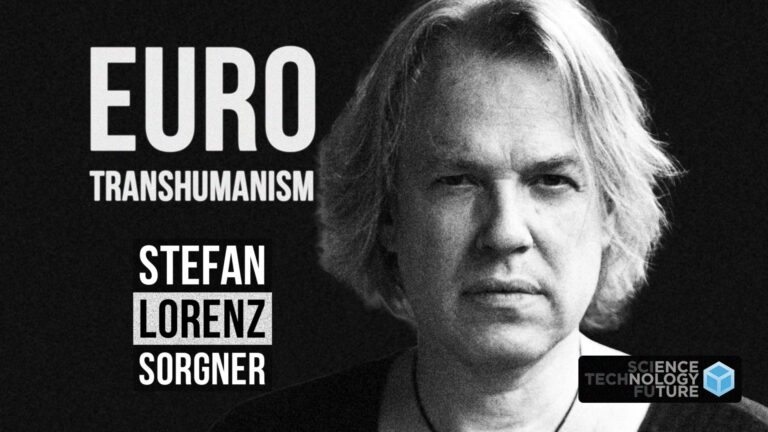
Stefan Lorenz Sorgner contrasts his Euro-Transhumanism approach with “classical transhumanism”. Stefan will publish a book about this soon. There will be a larger interview section added soon.
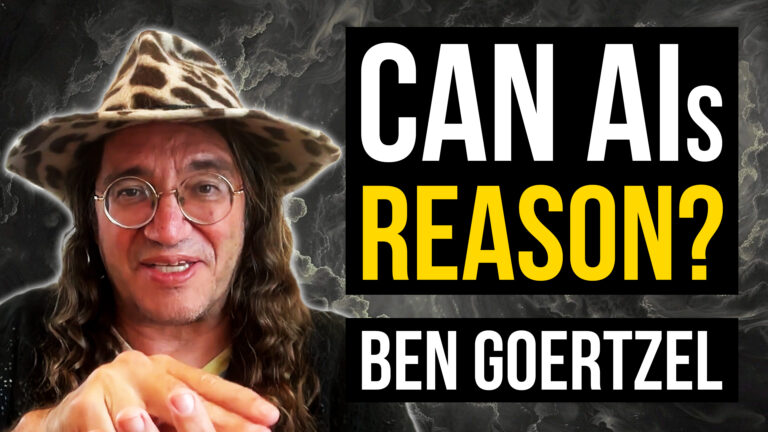
Can current AI really reason – or are large language models just clever parrots, skipping the “understanding” step humans rely on? In this interview, Ben Goertzel (founder of SingularityNET and OpenCog) digs into one of the most fascinating debates in AI today: he argues that there is a big difference between appearing to reason and…

Stelarc’s art suggests that humanity’s future lies not in holding onto the “natural” body, but in embracing its redesign. The body is contingent – a temporary configuration ripe for reinvention. “The idea of redesigning the body is something that’s come out from the perceived inadequacies in interacting with technology. So for me it’s not an…
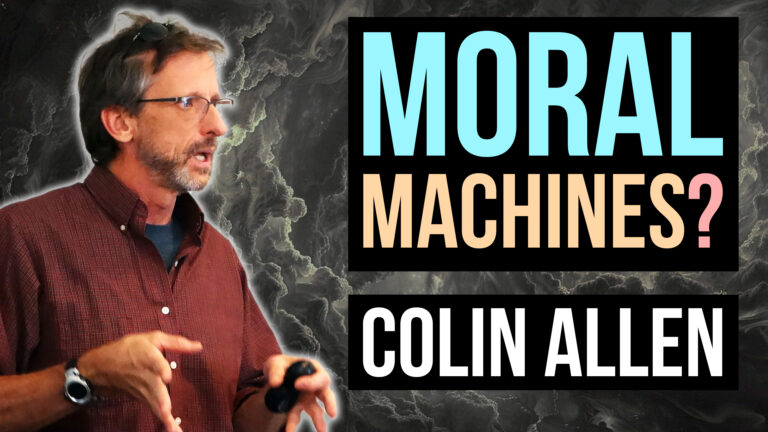
The Ethics of AI: Why We Need Moral Machines, Not Just Smart Ones In an era defined by rapid advancements in artificial intelligence, we often find ourselves wrestling with profound ethical questions. One of the most provocative of these is whether machines can, or should, be given a sense of morality. In this recent video…

During the Melbourne Writers Festival in May 2025 I had the priviledge of interviewing A.C. Grayling – which was in part a follow up to the interview we did in 2025 which also focussed on AI. This is a deep and wide-ranging conversation on artificial intelligence, AI safety, control vs motivation/care, moral progress and the…

In an era where artificial intelligence systems are increasingly tasked with decisions that carry ethical weight – from medical triage to autonomous weapons – the question of whether machines can authentically engage with morality has never been more pressing. To explore this issue, we turn to philosopher David Enoch, a leading advocate of moral realism…
Norm-sensitive cooperation might beat brute-force optimisation when aligning AI with the complex layers of human value – and possibly cosmic ones too. Nick Bostrom suggests that AI systems designed with humility and a cooperative orientation are more likely to navigate the complex web of human and potentially cosmic norms than those driven by rigid utility…

In his new book Deep Utopia, Nick Bostrom invites us to imagine a world where the big problems are solved—no hunger, no war, just a quiet hum of existential security and near infinite bliss. But then what? In a recent interview, he offers a poetic twist: “It might be completely appropriate to place more weight…

Nick Bostrom dropped a bombshell that cuts through some of the haze around AI doom-and-gloom: “I think ultimately this transition to the superintelligence era is one we should do.” That’s right—should. Not “might” or “could,” but a firm nudge toward a future where humanity doesn’t just survive AI but thrives with it. Even more striking?…

In short: Satiable values have diminishing returns with more resources, while insatiable values always want more, potentially leading to risky AI behaviour – it seems likely that AI with insatiable values could make existential trades, like gambling the world for a chance to double resources. Therefore potentially design AI with satiable values to ensure stability,…